Halcyon Alumni on Alternative Capital Strategies & Funding with Purpose – Part II: Climate
February 9, 2026
By Alexis Kartalian & Gretchen Haga
—
Recent funding cuts and shifting policies worldwide are creating a new reality for many climate founders who can no longer rely on government support or venture capital (VC) to fuel their growth. As a result, entrepreneurs are pivoting their business models, eyeing new geographies, and exploring innovative sources of capital as the landscape evolves.
In this edition of ‘From the Founders,’ four Halcyon climate alumni discuss how they’ve charted resilient paths forward by leveraging alternative financing strategies:

Nicole Whalen is the Founder of Green Compass, a startup delivering tailored green infrastructure solutions to reduce energy, emissions, and water costs.
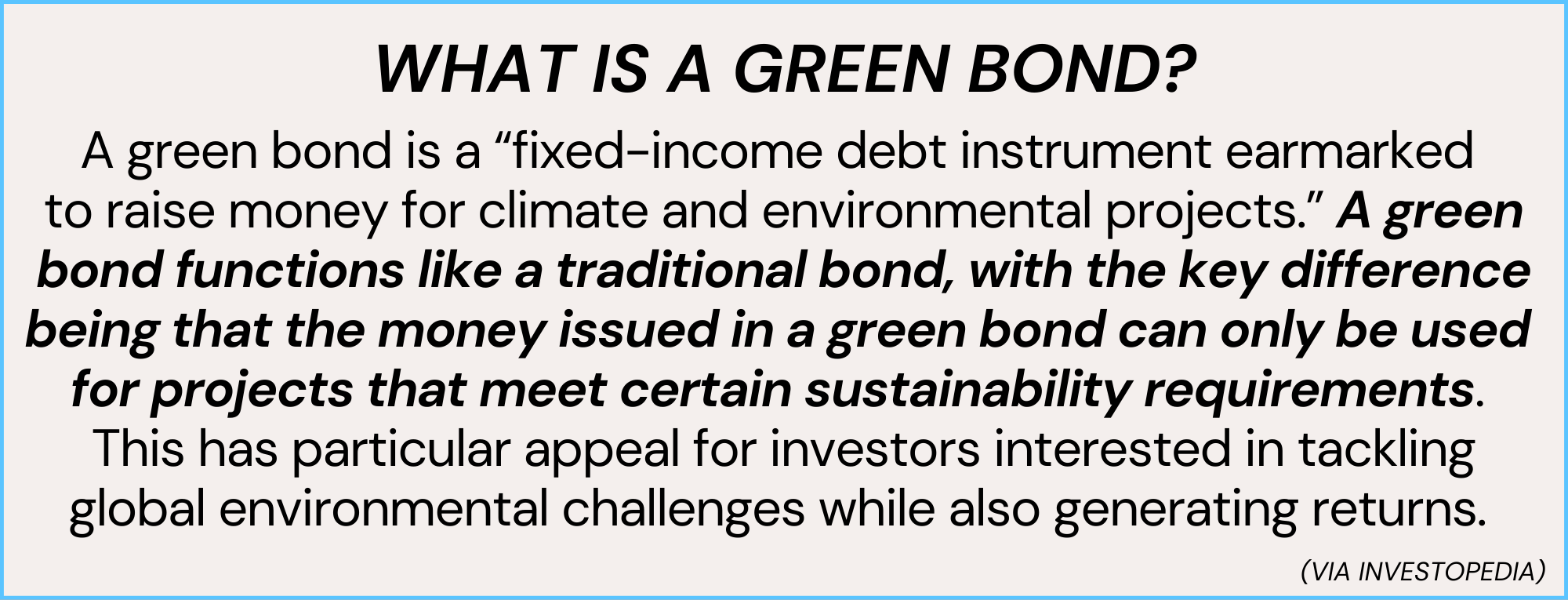
Nicole traces her interest in green bonds to her childhood, when her grandmother gave her and her siblings small savings bonds as birthday gifts, offering an early lesson in how capital can grow over time. As she began building Green Compass, that idea resurfaced, and she wondered: how could the bond model be applied to the climate space I’m in now?
Nicole initially declined friends-and-family funding in Green Compass’s early stages, preferring to wait until she had a structure in place that would allow her to responsibly return capital to her investors. She also wanted an alternative approach to equity, as traditional lenders often require high minimum loans and short-term repayment schedules that didn’t align with Green Compass’s long-term model.
A bond structure would allow Green Compass to repay investors on a timeline aligned with customer purchase agreements, creating a more predictable return model. While green bonds are most used by municipalities and large institutions, Nicole saw an opportunity to challenge the norm: “If it’s a tool that they can use, why can’t a small business use it too?”
The How: Crowdfunding
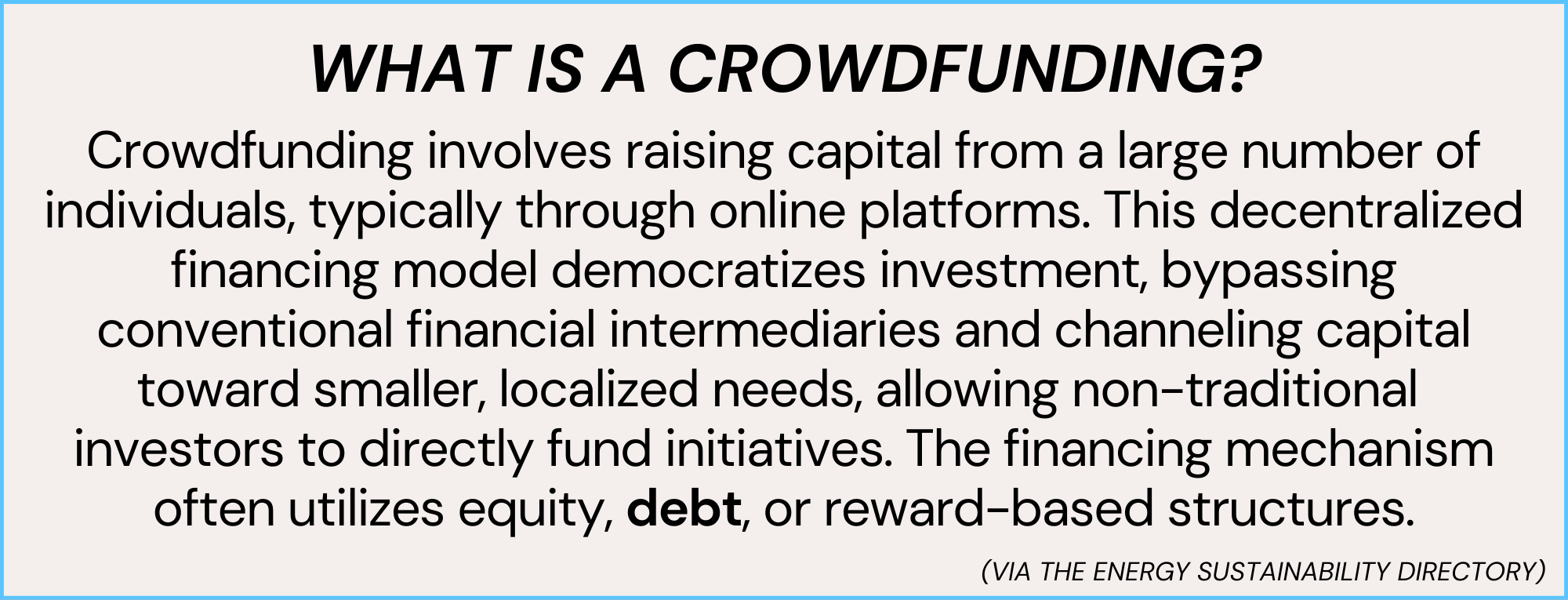
Green Compass issued its green bond through the crowdfunding platform, Raise Green (now part of Honeycomb Credit), enabling mission-aligned retail investors (i.e., non-professional, individual investors) to participate directly in the company’s growth.
Eligibility & Process
Issuing Green Compass’s first green bond required navigating regulatory thresholds and public fundraising requirements. To build investor confidence—particularly given that the bond functions as an unsecured loan—Nicole emphasized the company’s established revenue stream and committed purchasers in place.
In its first issuance, Green Compass raised $160,000 from 39 investors across 19 US states. This was an unexpected but welcome outcome for Nicole, as her venture primarily operates in the DC market. She believes this geographic diversity among her investors demonstrates that the bottlenecks in scaling climate solutions aren’t from a lack of demand or investor interest, but from difficulties in distributing finance effectively.
Beyond capital, Nicole found that the crowdfunding process brought an additional benefit of an expanded and engaged investor community that reads her quarterly updates, offers fresh ideas, and acts as “cheerleaders” across the country.
Measuring & Reporting Impact
Green Compass tracks and reports its impact across three KPI categories:
- Environmental: Tangible outcomes such as acres retrofitted, gallons of water captured and treated, carbon sequestered, and trees planted.
- Social: Community-level benefits including jobs created and participation in volunteer and advocacy efforts.
- Financial: Tracking the scalability of the business, from customer growth and transaction volume to pricing, margins, and annual recurring revenue (ARR).
This framework allows Green Compass to easily communicate their multi-faceted impact to funders, demonstrate their traction in real time, and connect environmental outcomes with financial performance.
Going Forward
Reflecting on her experience, Nicole values that green bonds allow founders to maintain greater control over their companies than with an equity investment. While the process requires significant effort, she found it more rewarding to operate independently by relying on mission-aligned, crowdfunded investors.
Nicole hopes that green bonds become a mainstream tool for unlocking climate capital. It’s trending in the right direction; in Q3 of 2025, the global green bond market passed the $3 trillion milestone for the first time, growing at a roughly 30% compound annual growth rate (CAGR) over the past five years.
Overall, Nicole advises impact-driven startup founders to study how larger institutions leverage incentives, credits, and financial structures, and adapt them at a smaller scale for their own ventures.
Kobby Osei-Kusi is the Founder of Pirl Technology, which enables businesses to profitably offer electric vehicle (EV) charging to their customers. He was recently named one of Technical.ly’s 2025 RealLIST Connectors.
Beginning with Non-Dilutive Funding
Kobby’s path to non-dilutive funding was shaped by both strategy and necessity. Kobby began with a traditional, Silicon Valley mindset of pursuing equity first. However, limited early access to traditional venture investors pushed him to explore alternatives.
Pirl’s first non-dilutive capital came through a Kickstarter crowdfunding campaign, which helped establish credibility. With this traction, he secured some equity funding, then turned to non-dilutive grants and accelerators. Initial stipend support from Halcyon, alongside its business training and external visibility, continue to fuel his venture.
Securing Grants & Building Organizational Relationships
With federal funding cuts limiting available climate capital, Kobby suggests focusing on state-level and quasi-state institutions, looking towards climate-supportive areas like Maryland, where he’s located.
He also stresses the importance of building relationships with grant-making organizations, noting that credibility compounds as these agencies communicate with each other and share information across networks. As a direct result of these relationships, Pirl received $10,000 from the Maryland Business Innovation Association (MBIA) to support its technology.
Resource Tracking & Sharing
In response to the difficulty of raising funding as a climate venture, Kobby began working behind-the-scenes to organize non-dilutive funding opportunities, including grants and accelerator programs. What began as a personal tool was later shared with his Halcyon cohort, and eventually expanded with the support of a virtual assistant, who maintains and updates the tracker. Earlier this year, Kobby decided to make the tool public on his personal LinkedIn page, and it now has approximately 900 users.
“I’ve personally benefitted a lot from the ecosystem, especially in this time…” he said. “People have found it to be a really useful resource. I’m just really glad to give back.”
To date, Kobby has secured $250,000 in non-dilutive funding for Pirl, primarily through state-level grants and accelerator programs.
Kobby’s Advice

Kobby points to guidance from the climate-focused VC firm, Third Sphere, which advocates for an approach to startup building known as “speedstrapping.” The strategy prioritizes rapid revenue generation and accessing non-dilutive capital with minimal equity fundraising, allowing founders to retain more ownership, reduce external pressures, and tap into a wide range of alternative financing options.
Chinenye Nlemchi is the Executive Director of Trashcoin, a waste management company that incentivizes recycling, enables efficient waste collection, and fosters sustainable practices and a circular economy approach.
Trashcoin has secured non-dilutive funding and partnerships from organizations including Coca-Cola and the Gates Foundation. Its blended finance strategy incorporates grants, catalytic capital, and revenue, supported by clear communication and demonstrable impact.
Grant Positioning
The Trashcoin team has accessed a wide range of grant opportunities by remaining flexible in how they frame their work. While rooted in ‘Eco-FinTech,’ the team is equally comfortable positioning the venture as an EdTech or climate education organization, depending on a funder’s priorities.
Rather than self-selecting out, they apply broadly and stay persistent with applications, refining their approach over time.
“There are some organizations that we apply to three times, and it was by the fourth time that we’re able to get in,” Chinenye says.
Measuring & Reporting Impact
Trashcoin emphasizes clear, human-centered impact such as workforce empowerment, with women representing 60% of their organization. They frequently showcase their climate education work, which includes tours across secondary schools, high schools, and colleges. Additionally, the team often travels to increase their international engagement, including winning the African Climate Innovation Challenge (ACIC) in Uganda. Grantmakers and investors, Chinenye notes, look for tangible outcomes when evaluating long-term impact.
Chinenye’s Advice
Chinenye advises climate founders to “start small, but start strong” by building pilots that clearly prove their model works before scaling. In their case, the Trashcoin team showcased how their AI- and blockchain-powered platform could track and incentivize user behavior, demonstrating their unique value proposition and ability to drive adoption.
Chinenye also emphasizes refining operations early, investing in people and systems, documenting progress to build credibility with funders, and avoiding overreliance on grants by integrating revenue from the outset.
Juan Pfeiffer is the Co-Founder and CEO of SEOS Energy, a finance and technology platform that is democratizing the ownership of energy in Latin America by putting the consumption and production of energy in the hands of individuals, communities, and micro-businesses.
Searching for Funding
Juan has identified funding opportunities by combining his accelerator experience with digital tools. He and his team have leaned on engaged organizations such as F6S and ClimateLaunchpad, as well as their time with Halcyon, for entry points into funding and partner ecosystems.
To scale this process, the SEOS team built and trained a custom AI agent that scans for relevant funding opportunities aligned with SEOS’s venture and previous grant submissions, making the search for capital has more targeted and efficient.
Grants Opening Doors
In 2023, SEOS received a $694,000 grant from the World Resources Institute (WRI). Juan views the WRI as an essential “anchor” funder, whose reputation and credibility encouraged additional investments from others in the ecosystem. He especially believes that the lengthy due diligence process that the WRI undertook before making their investment showcases the validity of SEOS’s business model.
To date, SEOS has raised a total of $1.8 million USD in grants and equity funding. $1.1 million has come from SAFE instruments, convertible notes, and an institutional debt facility of $500,000 secured late last year.
Juan’s Advice
Juan emphasizes that equity and VC aren’t always the only viable path for building a strong company, especially in early stages. He encourages climate entrepreneurs to remain adaptable, explore new geographies, and engage with multiple funding ecosystems rather than relying on a single approach.
Key Takeaways
While these four climate founders operate across regions and funding models, their experiences offer actionable guidance for early-stage climate entrepreneurs:
- Adapt to changing policies and remain open to unconventional funding approaches.
- Equity and VC aren’t always the best starting point; consider non-dilutive capital early.
- Apply to opportunities broadly, and remain flexible in how you position your venture.
- Build a system to track funding opportunities, leveraging tools and automation where possible.
- Consider your end impact and mission-alignment from start to finish.