Smart Support: How TuConsejería is Closing Mental Health Care Gaps through AI
May 2, 2025
By Gretchen Haga
—
Victor Juárez didn’t set out on his entrepreneurial journey looking to build a business. He was searching for answers. Then a government employee in Guatemala promoting the United States as an academic destination, Victor spent his days recruiting potential scholars. These were bright, promising youth who, on paper, should have leapt at the opportunity to pursue new opportunities abroad. But instead, most hesitated or declined altogether. After frequent visits with these students, something deeper emerged.
“I found out that they were victims of violence. They shared with me that there were a lot of problems with substances and bullying, and in many cases, they were sibling number seven [or] eight, and so they already had a big responsibility in their family,” Juárez said.
“So being aware of these opportunities and discarding them immediately was because of external reasons. And with the main issues around violence and substances, they were not talking to anyone about it.”
At the same time, Juárez knew a plethora of trained psychologists in Guatemala who were underemployed or working in unrelated jobs at call centers or as Uber drivers because they felt there was no demand for their services. Inspired by this disconnection, Juárez set out to build a bridge between them.

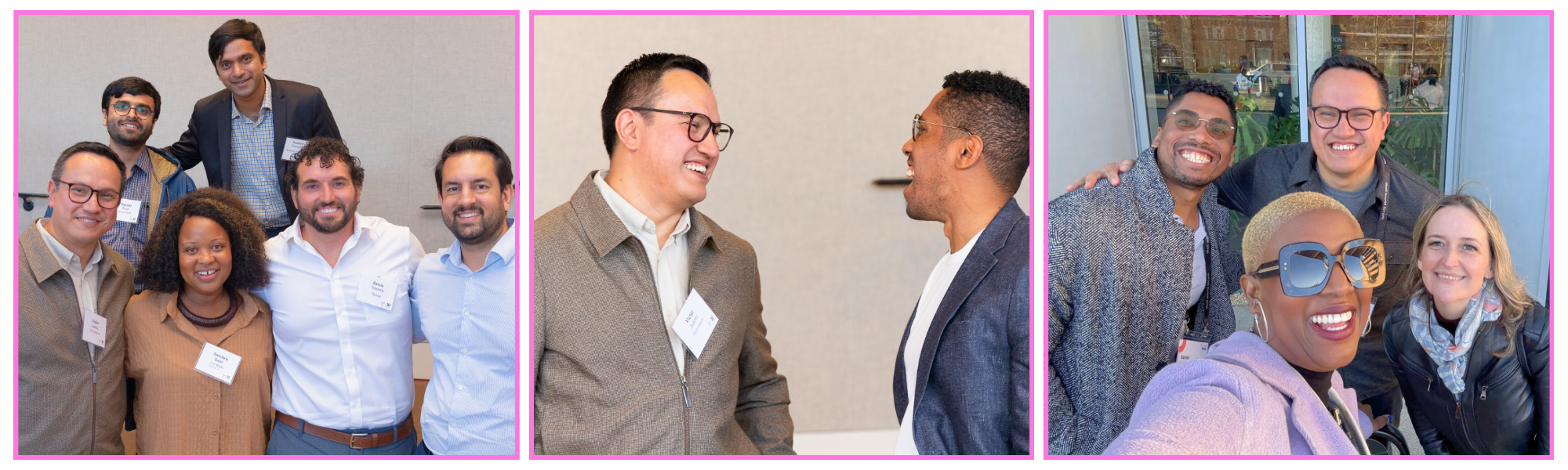

TuConsejería—literally translated to “your counseling”—was first established as a hyperlocal venture targeting the youth demographic Juárez identified. He set up a pilot mental health chat service using Facebook Messenger in computer labs in rural Guatemalan schools. Each time they ran the program, the labs filled to capacity.
Wanting to further explore this product-market fit, Juárez applied to Halcyon.
This experience allowed Juárez to deeply explore the US market, validating the potential for TuConsejería’s mental health services among Hispanic populations in the country. After shaping his venture’s expansion strategy, Juárez launched and incorporated in the US in 2022 to eventually provide a new basis of support for these underserved communities.
This time abroad also enhanced Juárez’s expertise on migration and mobility between the US and Latin America. He believes these systems are having a major impact on mental health, where stressors often overlap and compound.
“You see every day [that] people are starting to migrate because a lot of things have changed around them—access to water, access to good soil, things like that,” Juárez said. “There’s a big connection between climate change and mental health.”
TuConsejería’s largest consumer markets now include migrants and temporary workers and their families, as well as survivors of violence, women, seniors, and youth—all populations disproportionately affected by many of today’s escalating crises.
TuConsejería has won several government- and organization-funded competitions to carry out this support work, and the team has used these new pipelines to identify future projects in new countries in Latin America and Africa, including Malawi.

This year, TuConsejería also won a project with the Inter-American Development Bank (IDB) to fund its artificial intelligence development.
In an age where caution and nervousness persist around AI, Juárez’s thesis is clear: not to replace therapists with AI, but to use AI to lower the barriers to accessing and using mental health services.
Juárez and his team developed a WhatsApp-integrated AI assistant that delivers personalized, relevant information to employees across industries, covering topics like financial literacy, climate change, and labor migration. Designed to integrate seamlessly into workplace systems, the tool helps users perform their jobs more effectively while building trust, increasing the likelihood that people will eventually turn to it as a mental health resource.
Take, for example, the predominantly male warehouse workers at a large distribution center. Juárez focused on this group because they historically underutilize healthcare services, particularly mental health support.
The TuConsejería team first trained their AI model with practical resources, digitally uploading the warehouse’s machinery manuals. As employees began using the tool for day-to-day tasks—messaging a WhatsApp number from their personal phones to get quick, reliable answers about forklift functions or weight limits—engagement grew.
“As soon as they started asking questions and making their lives easier with the AI, the trust increased,” Juárez explained.
After their workday ended, communication continued, opening the door for more personal check-ins about mental health and well-being. Employees would receive a message asking: “How was your day today?” Because they were accustomed to positive, routine interactions with the service, they usually responded, Juárez said.
“We just tell potential users, “’Test it. Try it. Ask for help,’” Juárez said, highlighting how curiosity-driven use and trust built through everyday interactions can reduce stigma and barriers to care.
TuConsejería’s AI tool also identifies red-flag language and potential moments of crisis, which prompts users to connect with a live psychologist, as envisioned in the company’s original design.
Critically, the service simple to deploy. Users do not need to download an app or create a new account; they just add a WhatsApp number to their contacts.
It’s also affordable. Using a business-to-business-to-consumer (B2B2C) model, companies pay a membership plan, making the service free and confidential for the end user. Demand has grown, with employees’ family members increasingly requesting access to TuConsejería’s technology. Juárez is preparing to meet that need by launching a direct business-to-consumer (B2C) offering.
Juárez believes the future of healthcare will be shaped by social impact ventures like his, and he remains driven by a goal of staying close to the people he serves.
“In healthcare in general, and specifically in mental health, there’s been a lot of services and opportunities, but most of them are located at the top of the pyramid,” Juárez said. “That’s the main reason why we are focused on the bottom of the pyramid, which is where most of the people on the planet are, where most of the needs are.”
“We [are going] to remain as close as possible to our clients, users, audiences—despite anything that happens politically, socially, or anything that happens around us,” he added. “That is our mission.”
To explore past Halcyon fellows and ventures in the Health space, visit this link.