Meet 5 Ventures Accelerating Climate Innovation Across the Caribbean
March 9, 2026
Halcyon’s Dan Barker recently attended the Caribbean Philanthropic Alliance‘s first global conference, Future Forward, in Kingston, Jamaica. Moderating a conversation on scaling Caribbean-led solutions, he left the stage with a question posed by fellow panelist Jamil Wyne: With so much at stake—and with so many founders building solutions in real time—what are we waiting for?
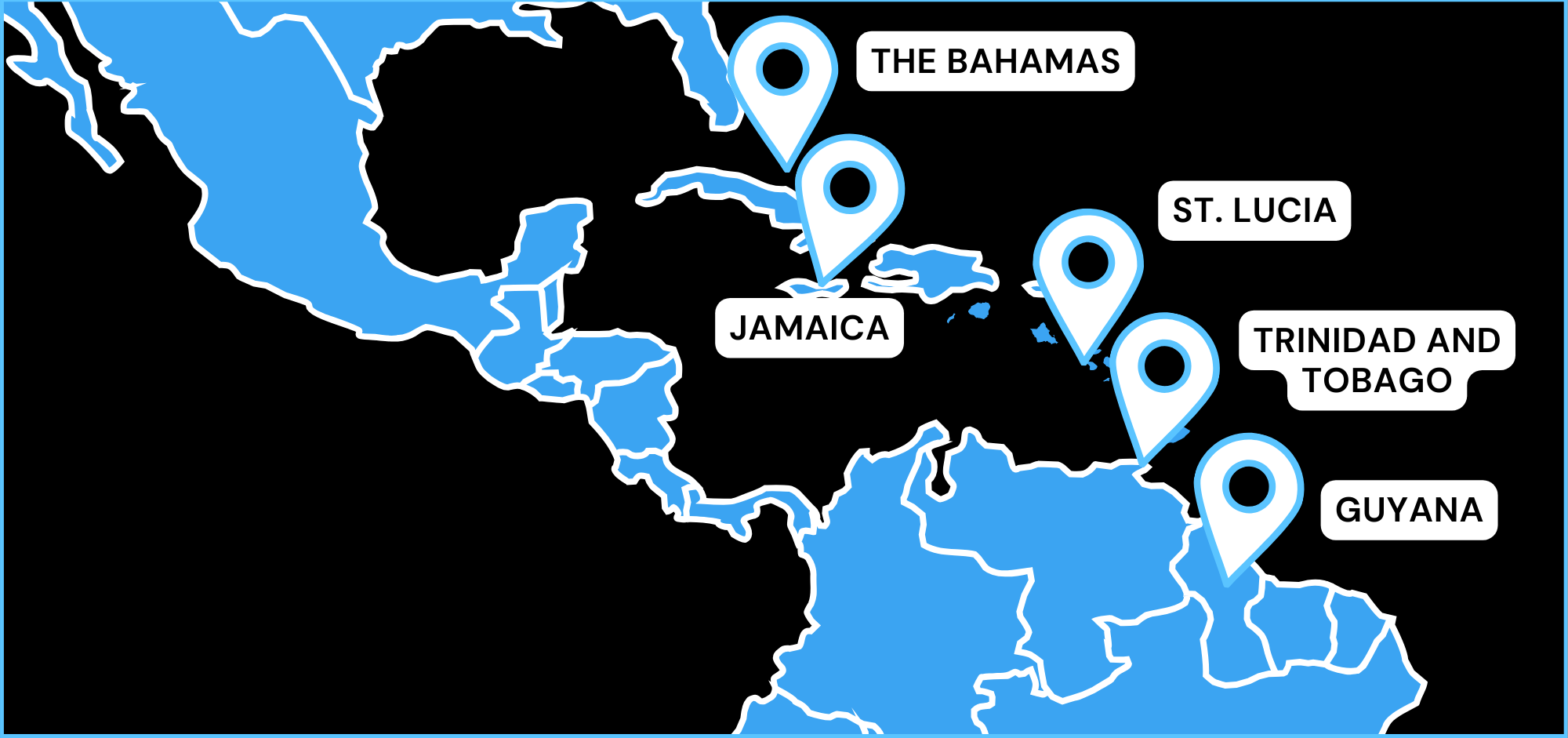
As the Caribbean faces escalating climate challenges, impact-driven entrepreneurs across the region are uniquely equipped to confront them at their source, and with the speed, lived experience, and deep community trust that other institutions can’t match. At Halcyon, we’ve had the privilege of working alongside several innovators who have already gotten started. Beyond advancing climate adaptation and resilience, their ventures are unlocking new pathways for economic opportunity and regional self-determination. Meet them below:

The Local Climate Reality: Waste management is an escalating challenge across Trinidad and Tobago and the wider Caribbean. In small island contexts, per capita waste generation is 48% higher than the worldwide average, further exacerbated by seasonal tourism surges. Roughly 80% of this litter ends up in the ocean or on coastlines, with recycling rates across the entire Latin America and Caribbean (LAC) region sitting at just 4%. In Trinidad and Tobago specifically, waste generation per capita is among the highest in LAC.
As physical space on the Caribbean islands is limited, traditional landfill models are increasingly unsustainable. The World Bank projects that global waste generation is expected to increase by 70% by 2050 if no action is taken, placing disproportionate pressure on Small Island Developing States.
—
The Intervention: Sian Cuffy-Young’s Siel Environmental Services Limited delivers culturally grounded waste training and project consultancy solutions across the Caribbean. The company works directly with SMEs and corporate clients to streamline waste systems, improve their efficiency, steward circular economy and resource management training programs, and implement more environmentally responsible practices.
Siel has also developed a waste education program for school-aged children, launched the country’s first online teaching platform focused specifically on waste management, and published a series of children’s books on waste literacy. By pairing technical guidance with customized, interactive, and accessible education initiatives, the venture addresses both operational gaps and cultural attitudes towards waste.
—
Why It Matters Now: Siel signals a shift from reactive cleanup to proactive systems change. By equipping businesses and institutions with practical tools, the venture strengthens climate resilience at both the community and enterprise level. In land-constrained island settings, improving waste systems is not only an environmental necessity, but also a compelling economic imperative.
- Siel will also be hosting the Caribbean Food Waste Summit & Culinary Festival on Oct. 2, 2026, a one-day, solutions-focused gathering to share practical, Caribbean-tested approaches to rethink how island nations approach food waste, targeted for hospitality leaders, sustainability practitioners, and eco-conscious citizens. Learn more and register here.

The Local Climate Reality: Coral reefs are among the most valuable and threatened ecosystems on Earth. Roughly half of the world’s corals have already been lost, and scientists warn that reefs could decline by up to 90% at current warming rates. Though reefs cover less than 1% of the ocean floor, they support an estimated 1B people through food security, jobs, and coastal protection. Notably, reefs are shown to reduce wave energy by an average of 97%, providing staggering flood protection benefits, particularly from escalating climate-driven weather events.
As reefs degrade, so does their protective capacity, leaving Caribbean coasts and communities increasingly vulnerable. Traditional restoration approaches, which rely on slow natural growth rates, cannot scale quickly enough to meet the urgency of this crisis.
—
The Intervention: Coral Vita, co-founded by Sam Teicher and Gator Halpern, is redesigning reef restoration for speed and scale. The company grows climate-resilient corals via land-based farms in months instead of decades, accelerating growth rates by up to 50 times. These corals are transplanted onto threatened reefs, restoring ocean biodiversity and strengthening natural coastal defenses.
Coral Vita operates as a multi-stakeholder, systems-level model that blends science, community partnership, and market-based restoration to drive both ecological recovery and economic opportunity. The venture sells restoration as a service to hotels, cruise lines, governments, insurers, costal property owners, and other clients. Its flagship farm in Grand Bahama not only restores reefs, but also educates local communities, trains coral farmers, and attracts eco-tourism. The company also licenses its proprietary technology, BrainCoral—which combines hyperspectral imaging, machine learning, and a mobile app—to help coral restoration practitioners across the industry drive more cost-effective and impactful outcomes.
—
Why It Matters Now: Momentum around coral restoration is accelerating, and Coral Vita has emerged as one of the sector’s defining pioneers. In 2021, the company became the first-ever winner of Prince William’s £1M Earthshot Prize in the “Revive Our Oceans” category. Sam Teicher and Gator Halpern were also named to Forbes’ 30 Under 30 list for Social Entrepreneurship. Last year, the company closed an $8M Series A investment round, the first ever raised for coral reef restoration.
As costal climate risks intensify, reef restoration is no longer just conservation work; it is climate adaptation infrastructure, and it must scale quickly.
The Local Climate Reality: Agriculture in Guyana and across the Caribbean faces mounting strain from rising chemical costs, pest outbreaks, and an aging farmer population. Climate variability continues to disrupt yields, and half of the region’s population reports experiencing moderate to severe food insecurity on a year-to-year basis. In Guyana, food unaffordability has been a persistent challenge, exacerbating insecurity at both the household and national level. Between March 2021 and March 2022, for example, food prices rose by 5% per month, placing additional strain on families and producers.
—
The Intervention: Founded by Brian Smith, Dragonfly Drones and Geospatial Solutions improves agricultural productivity, reduces chemical use, and promotes sustainable, climate-resilient farming practices through data-driven solutions. Its pilot initiative, AgroFly Precision Spray Services, deploys autonomous drone flight technology to enable plant health monitoring, precision application of fertilizers, pesticides, and herbicides, yield tracking and estimation, and crop analysis. By applying inputs only where needed, Dragonfly helps farmers lower their costs, reduce environmental impact, and raise outputs in the face of growing climate uncertainty.
—
Why It Matters Now: Precision agriculture offers a pathway to increase yields without expanding land use or deepening chemical dependence. As climate disruptions in the Caribbean are projected to intensify, strengthening domestic agriculture becomes a core adaptation and resilience strategy.
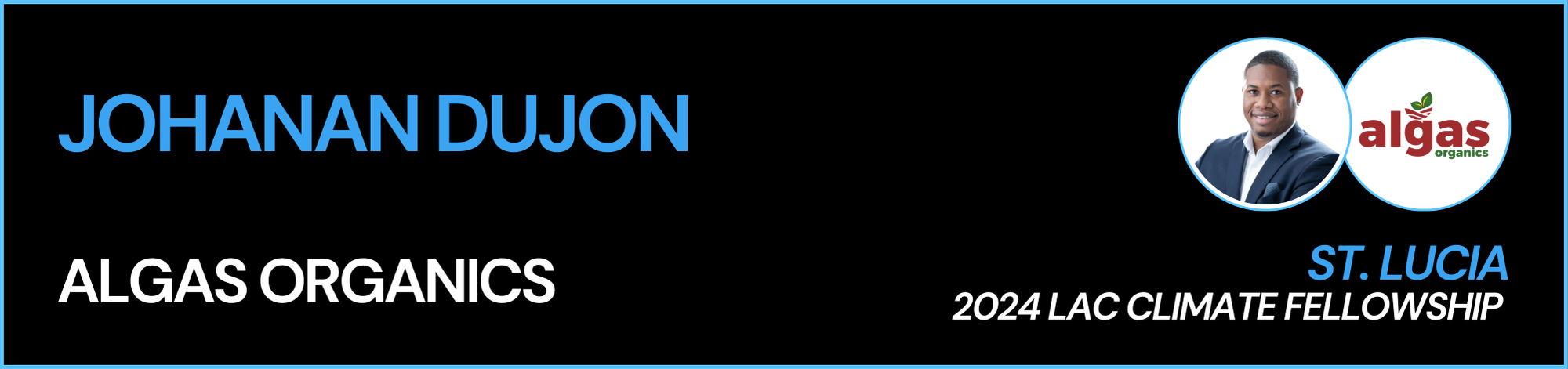
The Local Climate Reality: The world generates more than 420M metric tons of plastic waste annually. Much of this waste enters land and marine environments, contributing to ecosystem degradation, food web disruption, and microplastic contamination.
Paper and cardboard are often touted as more sustainable non-plastic packaging solutions. Yet in humid climates like the Caribbean, paper loses its strength and often requires chemical additives that complicate recycling and face regulatory scrutiny. At the same time, new deforestation policies from the European Union are reshaping global supply chains, exposing vulnerabilities in legacy fiber and wood-based systems. The transition away from plastic and unsustainable forestry requires new materials that are high-performing, scalable, and climate-resilient.
—
The Intervention: Johanan Dujon’s Algas Organics is building AltFibr, a next-generation cardboard material engineered from agricultural residue. The company transforms abundant, fast-growing sources of non-wood cellulose that would have been discarded as farm waste—such as banana stems, pineapple leaves, and seaweed—into high-performance fibers. Unlike seasonal forestry inputs, these agricultural feedstocks can be harvested year-round, improving supply chain reliability.
AltFibr can be blended directly into existing cardboard production to enhance strength or used as a standalone material. It integrates seamlessly into existing machinery and production lines, allowing manufacturers to adopt the material without overhauling infrastructure. The result? A material designed to outperform legacy options across critical metrics, including performance, cost, and scalability. AltFibr is reported to be twice as strong, 20% lighter, and to carry a 40% lower carbon footprint than conventional cardboard, all while using zero trees.
—
Why It Matters Now: The venture’s growing international recognition, including a 2025 MassChallenge RESOLVE Award and Johanan Dujon’s inclusion on the Forbes 30 Under 30 list, has spotlighted St. Lucia as a growing hub for biomaterials innovation.
As regulators tighten standards around plastics and additives, manufacturers are seeking materials that meet sustainability goals without sacrificing performance or price. Algas Organics enters this moment with a solution built for immediate integration and long-term transformation.

The Local Climate Reality: The transport sector accounts for nearly a quarter of global energy-related CO2 emissions. Small Island Developing States contribute less than 1% of that total, but are often among the first and most vulnerable to experience the effects, from rising fuel costs to intensified climate-driven weather events.
—
The Intervention: Led by Damani Thomas and Volentina Nicholson, Carbon Neutral Initiative works to reduce pollution in transportation and industrial refining at the source. Its flagship product, De30 biofuel, is designed to burn cleaner and more efficiently than conventional blends and other low-emissions alternatives, lowering both carbon intensity and operational costs. The solution aims to strengthen energy security and decrease fossil fuel dependency across the sector to enact change.
The venture also developed the Carbon Attack Filter, a biodegradable carbon capture filter for passenger vehicles that traps major hazardous greenhouse gases before they enter the atmosphere, and that can be upcycled into other circular economy applications after use.
—
Why It Matters Now: The global voluntary carbon market was valued at approximately $4B in 2024 and is projected to grow to nearly $24B by 2030, reflecting rising demand for credible decarbonization pathways. As markets expand and companies seek verified pathways to lower emissions, ensuring transparency and local benefit is critical.
Carbon Neutral Initiative has received grant funding from the Development Bank of Jamaica and received support from several key national and regional partners to date, signaling growing confidence in homegrown climate innovation and positioning Jamaica as a key contributor to scalable energy innovation.
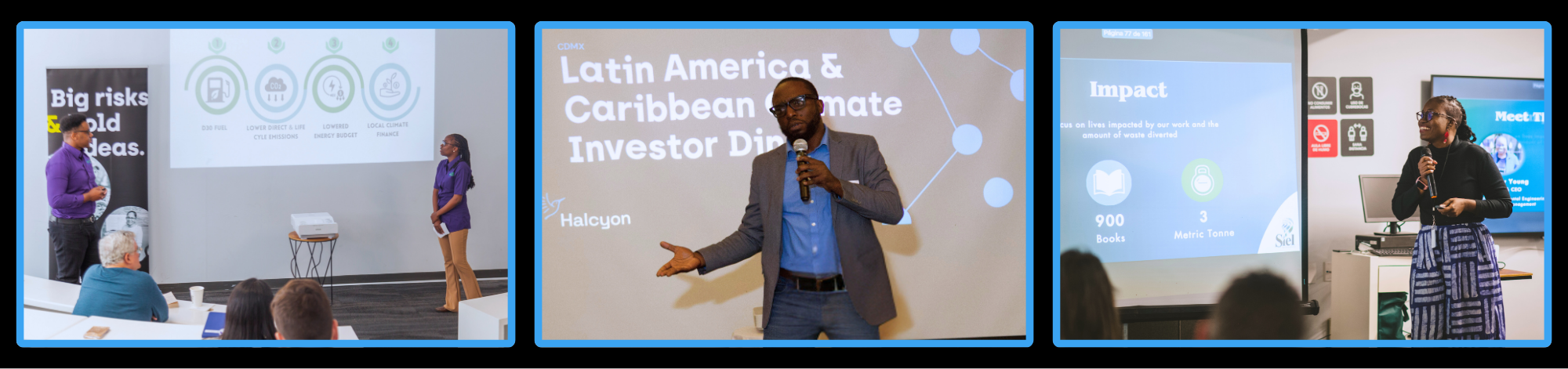
This year, Halcyon will be launching a Caribbean Climate Pre-Accelerator, a six-month program supporting early-stage, proximate climate founders across the Caribbean in partnership with the Hazelwood Network and supported by ClimateWorks Foundation.
We’ll also continue our Climate in LAC program, which will include the Jamaica-based venture, ARTEL, and the Trinidad and Tobago-based venture, 3BA Allamanda Enterprise Limited.
- Sign-up for our newsletter and follow us on social media to be the first to hear when applications open for our 2026 Caribbean Climate Pre-Accelerator and to follow along with these programs and their founders throughout the year.