Rising Above the Moment: How Impact-Driven Enterprises Are Charting a New Course for Tackling the Planet’s Most Pressing Challenges
December 16, 2025
By Dan Barker
—
Despite the tragic decline in development finance and slow progress toward the Sustainable Development Goals, there is an opportunity to refocus our efforts in ways that will drive impact. Impact-driven entrepreneurs are a pivotal group of changemakers uniquely positioned to connect sustainable products and services to businesses, individuals, and communities where they’re needed most.
WASHINGTON, DC – To say it has been a challenging year for sustainable development would be an understatement. From the dismantling of USAID and global reductions in official donor assistance (ODA), to the multiple overlapping environmental and social crises, it’s clear that progress toward achieving the U.N. Sustainable Development Goals (SDGs) is falling short. And our institutions aren’t meeting the moment—with processes, systems, and funding models built for a different era, they are unable to move at the pace of social change and technological innovation.
As tragic as the shifts in development finance have been, this moment creates an opportunity to think differently about how we accelerate progress toward the SDGs. Even before this year’s shifts, slow progress toward the goals made it clear that traditional development models weren’t working and opportunities to leverage technology were being missed.
The good news is that a group of changemakers is ready and able to tackle our most pressing challenges: impact-driven entrepreneurs. Given the right resources, these entrepreneurs can play a unique role in creating the solutions we need—responding faster than large institutions, being closer to the ground than governments, and building with sustainability and scalability in mind.
Entrepreneurs are in an ideal position to thrive in this new landscape. They aren’t locked into the processes and path dependencies that we see from government and large NGOs. Their nimble approach of testing, iterating, and scaling what works and what resonates with consumers allows them to build solutions that are reflective of realities and people’s actual behavior. They scale when there is alignment between a product and a problem solved, not because of a mandate given by an institution. Because they are nimble, they can move with speed and adjust to demands in real-time.
Impact-driven firms require lighter upfront investment and have less overhead than traditional mega donor projects that involve coordination across huge bureaucracies. With the right catalytic investment, scalable solutions drive recurring revenue and profitability, creating a positive feedback loop that feeds continued growth and—most importantly—impact.
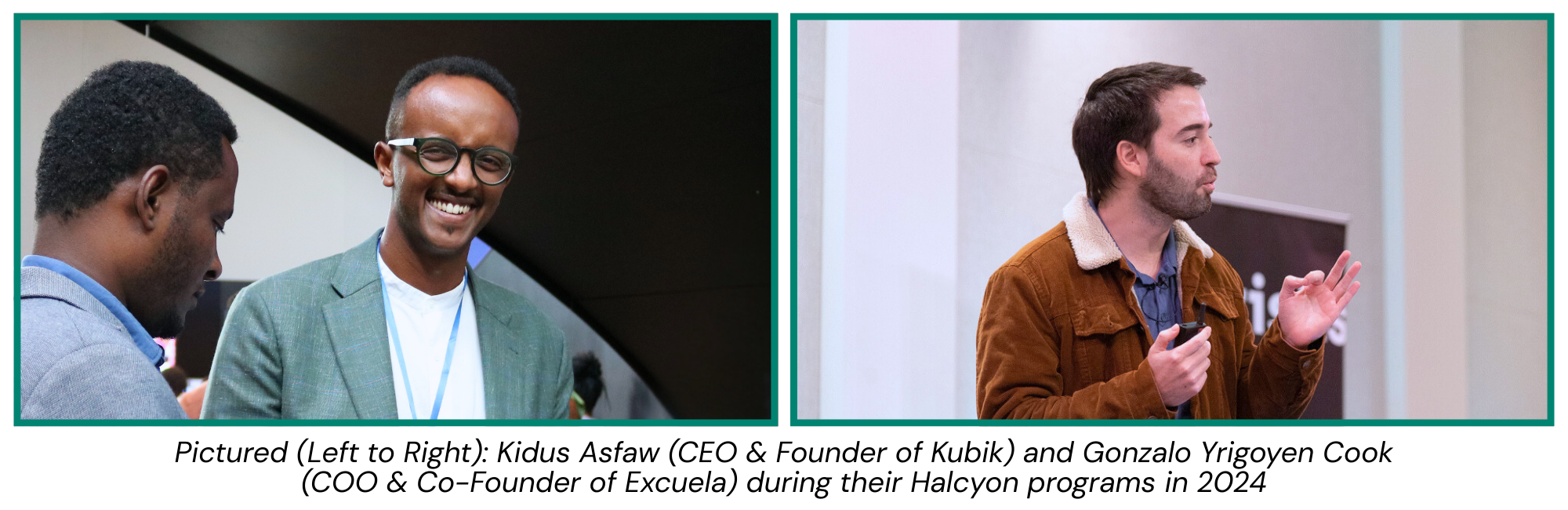
The impact of these enterprises is far-reaching, and entrepreneurs are tackling systemic issues across regions and sectors. For example, in Africa—the continent with the fastest population growth—there are compounding challenges managing increasing plastic pollution, sourcing sustainable and affordable building materials, building affordable housing, and creating well-paying jobs. Ethiopia-based Kubik has innovated to convert hard-to-recycle plastic waste into low-carbon, low-cost building materials. Kubik’s work solves for all of these challenges while building a self-sustaining model that doesn’t require continuous government or philanthropic subsidy.
Meanwhile, there are 2.7 billion frontline workers worldwide (80% of the global workforce) who are essential to various industries but receive minimal investment in training (just $18 billion out of $240 billion annually). In Latin America, low productivity due to inadequate education and skill gaps exacerbates economic disparities and high rates of informal work. Addressing these gaps through skill improvement and reskilling is crucial to breaking the cycle of low productivity and informality. Peru-based Excuela has developed a mobile education system designed for frontline workers and vulnerable populations. It provides accessible, relevant, and continuous learning through low-cost, data-efficient technological solutions. Excuela leverages mobile technology to improve skills, productivity, and growth opportunities for frontline workers globally, especially in emerging regions.
As diverse as these enterprises may be, they share several key factors in common. Founders are identifying local challenges and developing novel solutions that fit within their unique context. And they are able to iterate quickly, adjusting and adapting to meet the needs of the moment.
According to the World Economic Forum’s “The State of Social Enterprise” report, there are “approximately 10 million social enterprises across the world, generating around $2 trillion in revenue each year and creating nearly 200 million jobs.” The report goes on to say that “social enterprises are also bridging the gender gap, with one in two social enterprises worldwide led by women, compared to one in five for conventional enterprises.” This represents a significant sector of the economy, and a thriving area for growth and innovation.
Despite their potential, such enterprises were often overlooked in the old paradigm of development finance in favor of large-scale multilateral initiatives that required coordination across many government agencies or NGOs—often with a much greater investment to do the same work. We are under-investing in these kinds of businesses and the ecosystem that supports their growth and derisks their companies. Rather than recreate the financing mechanisms that existed before, we have an opportunity to reimagine how ventures are funded. We need more philanthropic capital to get them the technical expertise that would de-risk them and the financing to build their product. We need blended capital vehicles that help them get to revenue, and mature capital markets that can sustain their growth through equity and debt as they scale.
So, in a time of constrained resources, how do we ensure a sustained stream of funding for the solutions of the future?
Within the current vacuum of leadership in development finance, there is an opportunity for funders from across the ecosystem to come together with a new mindset for investing in social entrepreneurship. First, we have to properly value these enterprises for the economic, social, and environmental challenges they are solving. Then, we have to adapt financing vehicles to be more risk tolerant and concessional to match their impact. While some examples of this exist and should be scaled—such as the Caribbean Biodiversity Fund, Catalyst Fund, IMPAQTO, and Open Road Alliance—this is still an area of debate more than practice. That needs to change.
Impact-driven enterprises are moving quickly. The development finance community must rise to the occasion, ensuring capital is allocated to new and emerging technologies and solutions to pressing challenges. While government, civil society, and the traditional private sector are still critical, it’s time for us to put more attention and resources behind new models. There is no going back to development as it was—let’s focus our energy on those who are building the world that could be.