Halcyon Alumni on Building Intentional Partnerships to Drive Growth
June 30, 2026
By Alexis Kartalian & Gretchen Haga
—
Strategic partnerships are often among the biggest catalysts for early-stage ventures. The right collaboration can build customer trust, open new distribution channels, strengthen credibility, and help founders scale faster than they could alone.
Notably, 84% of startups consider targeted, individual partnerships their most important type of collaboration, according to one study from McKinsey. Meanwhile, 94% of tech industry executives consider innovation partnerships essential to their strategy.
However, meaningful partnerships rarely happen by accident. They result from intentional relationship building, strategic alignment, and a clear understanding of mutual value.
In this edition of ‘From the Founders,’ three Halcyon alumni share how they refined their go-to-market strategies, secured early collaborators, and used strategic relationships to scale their ventures.

Starting Small & Building Momentum
With many founders, their first partnership becomes a proof point that unlocks future opportunities.
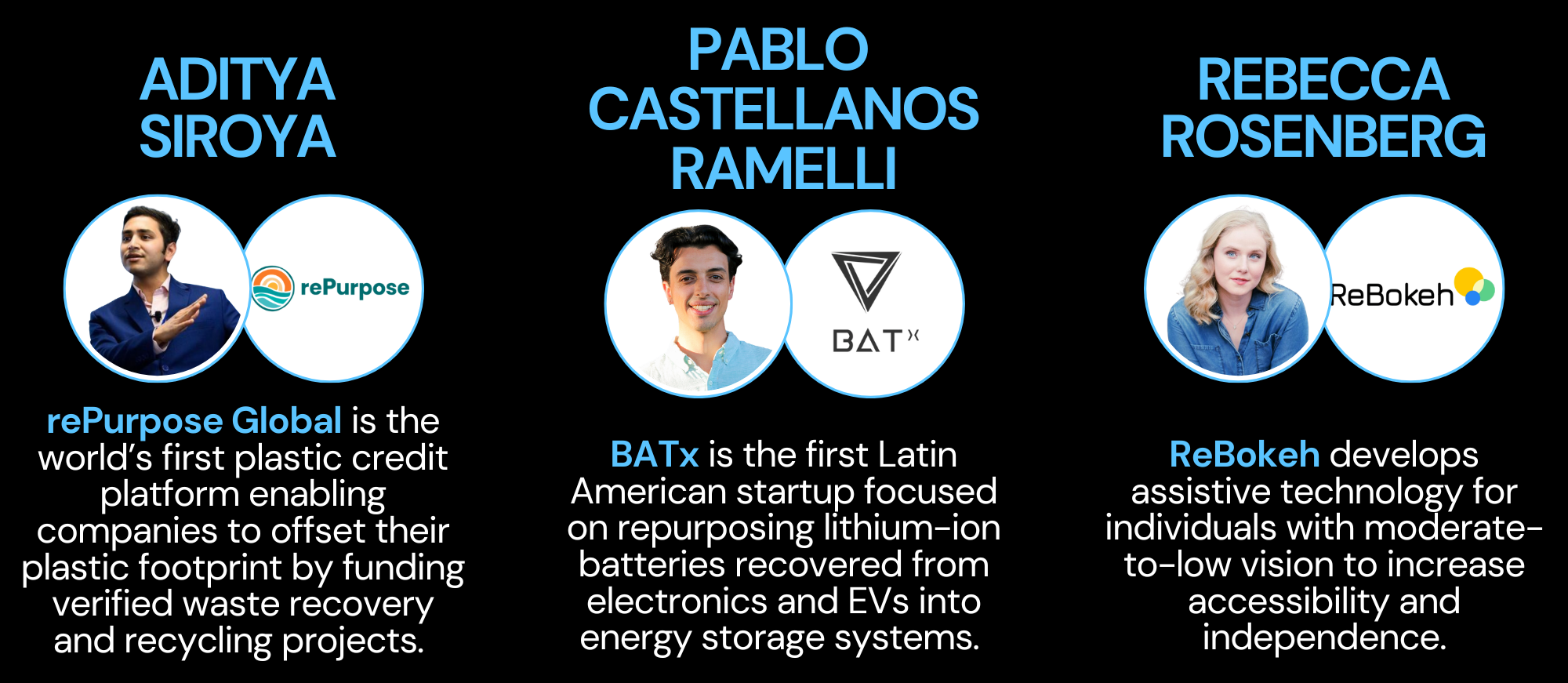
For BATx, this came through Fundación Socya, a Medellín-based consultancy firm that manages ESG programs and sustainability initiatives for corporations across Colombia.
As an NGO, rather than an investor or customer, Socya first supported BATx by providing workspace and access to its ecosystem—helping the venture expand its network of potential collaborators and establish early commercial connections.
“Suddenly we were in [an] environment where different corporates could interact with us and see our work firsthand,” Pablo said. “And it’s been growing like a snowball effect.”
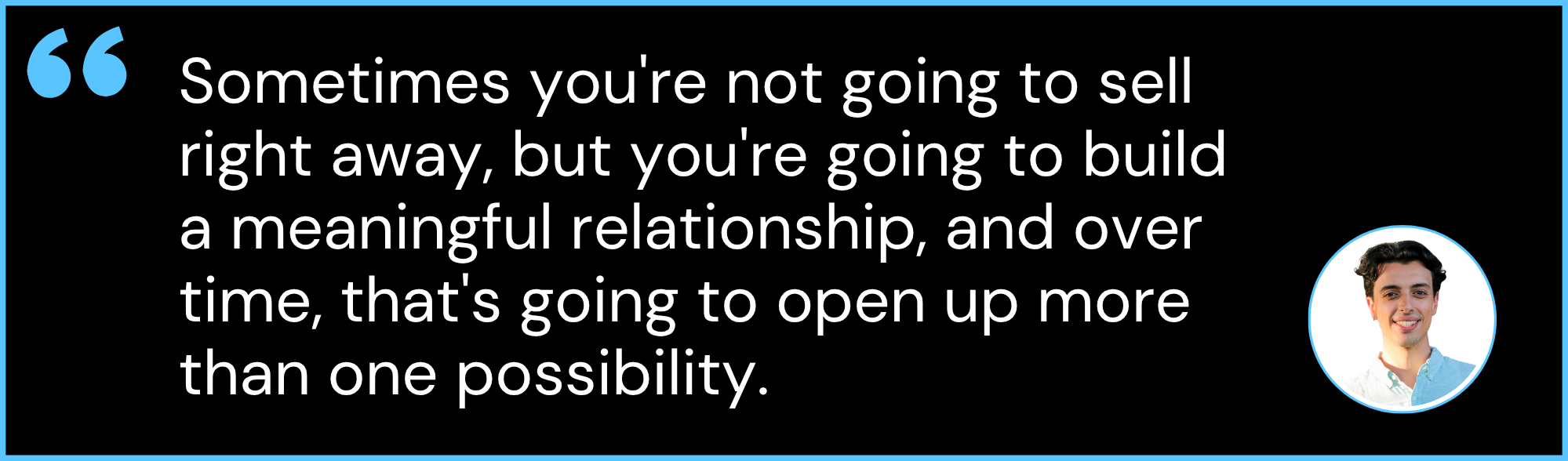
Pablo took a lesson from the experience that still informs his work today: “Sometimes, a lot of partnerships aren’t born out of a commercial relationship, but the commercial benefits will come in due time.”
“The valuable connections that we have built through [Socya] have opened many more leads, many more closed deals than if we had just done one sale at the beginning,” he added. “And that’s because we adapted to actually listen to what they needed.”
Similarly, ReBokeh‘s first notable collaboration grew out of an existing relationship. After launching her founder journey at Towson University’s StarTUp program, Rebecca later worked with the university to offer premium access to the ReBokeh app for anyone in Towson’s StarTUp at the Armory, a public-focused entrepreneurship hub and co-working space.
Early collaborations like this helped ReBokeh refine its onboarding process and better understand customer concerns before expanding nationally.
These deployments also helped establish credibility with future partners.
“A lot of places will ask, ‘Have you ever dealt with X before?’” Rebecca said. “And being able to say yes makes them feel better.”
ReBokeh has since expanded through activations with the Miami International and BWI Thurgood Marshall airports, the Detroit Zoo, the Georgia Aquarium, the Smithsonian American Art Museum’s Renwick Gallery, and others.
For rePurpose Global, Aditya views partnerships as a key growth lever for sales—an especially important philosophy after his venture pivoted from a consumer-focused model to working directly with brands.
One early breakthrough came with Farrington Oils, a UK-based food company that featured rePurpose Global’s certification directly on its packaging. This visibility quickly generated inbound interest from peers in adjacent categories.
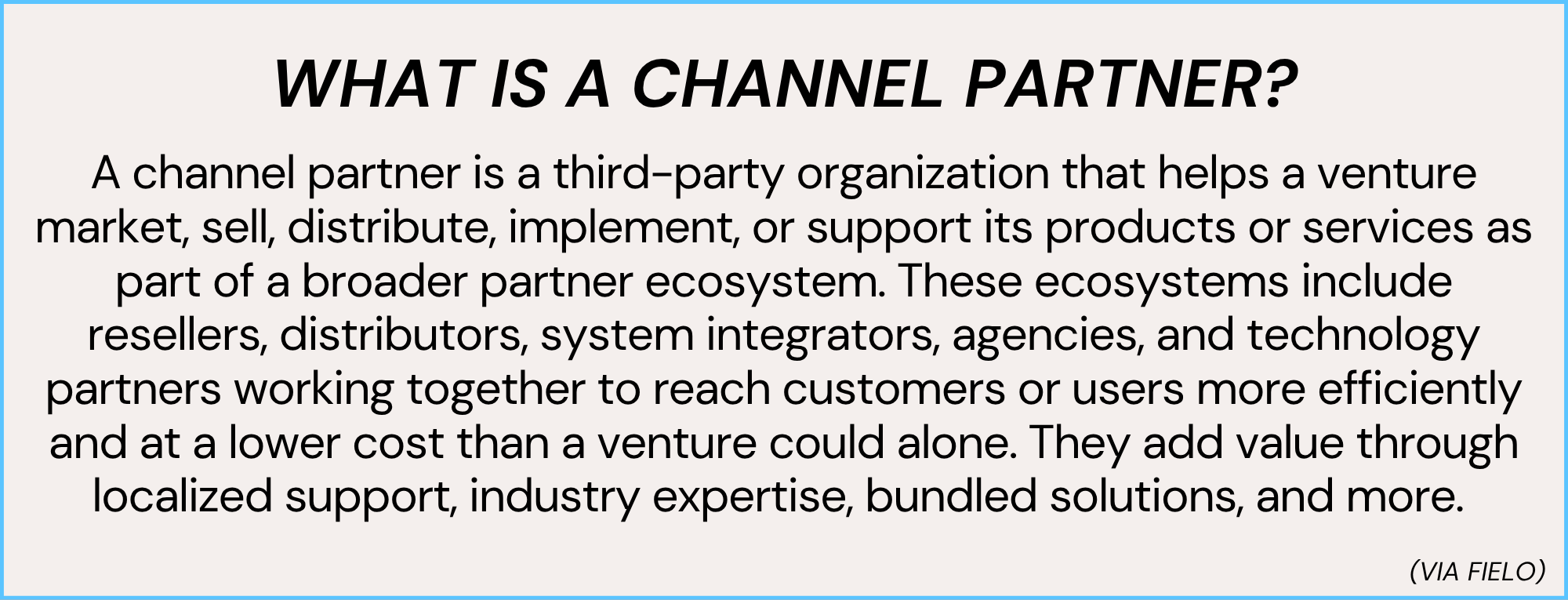
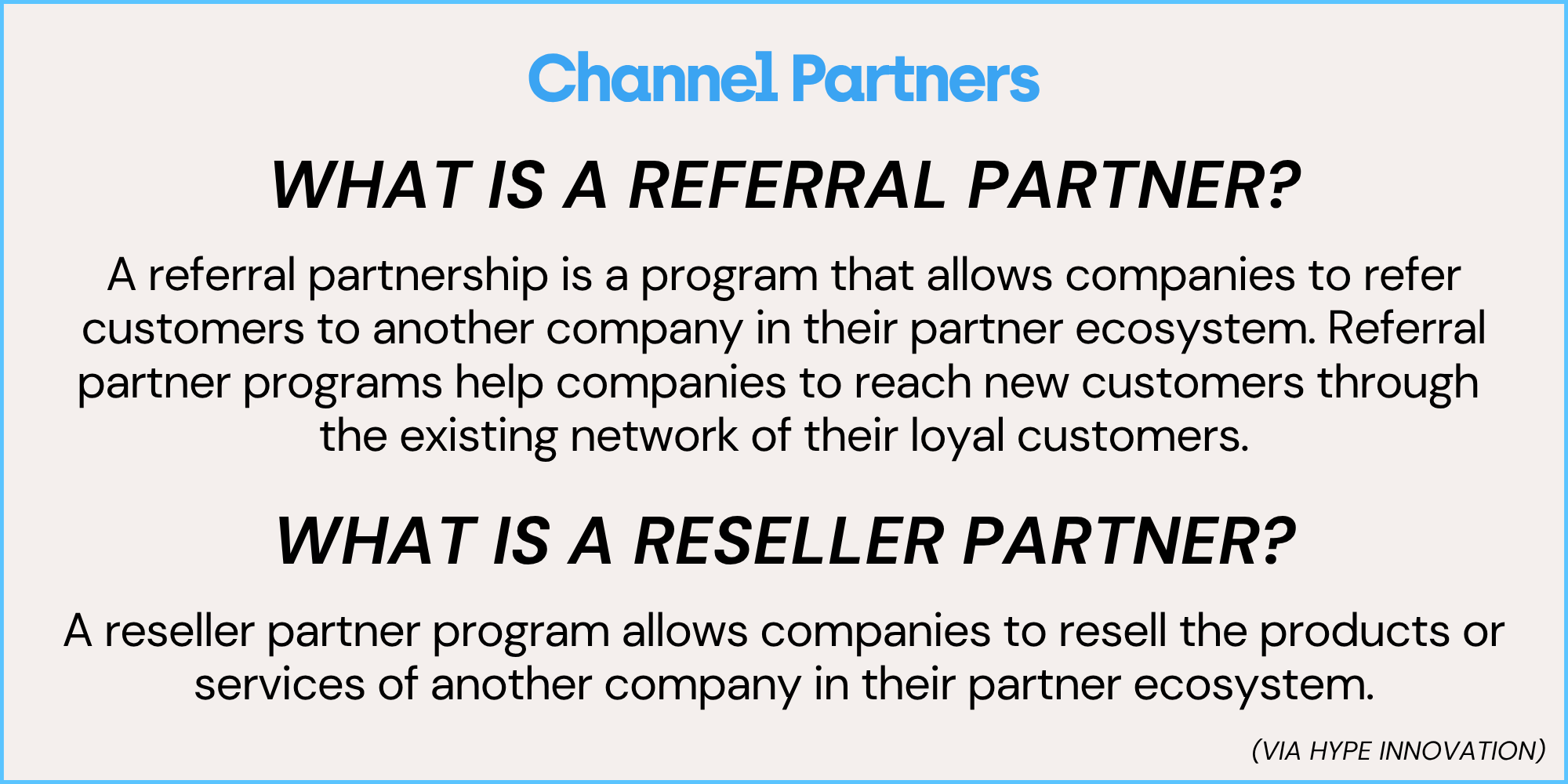
Today, Aditya focuses on leveraging strategic relationships as a means to acquire new customers, typically through referral, reseller, or other channel partners.
Building Around Shared Values
Across all three founders, one theme stood out: the importance of mutual fit and alignment. Rather than approaching partnerships as transactions, each entrepreneur focused on how their venture could help others achieve their goals.
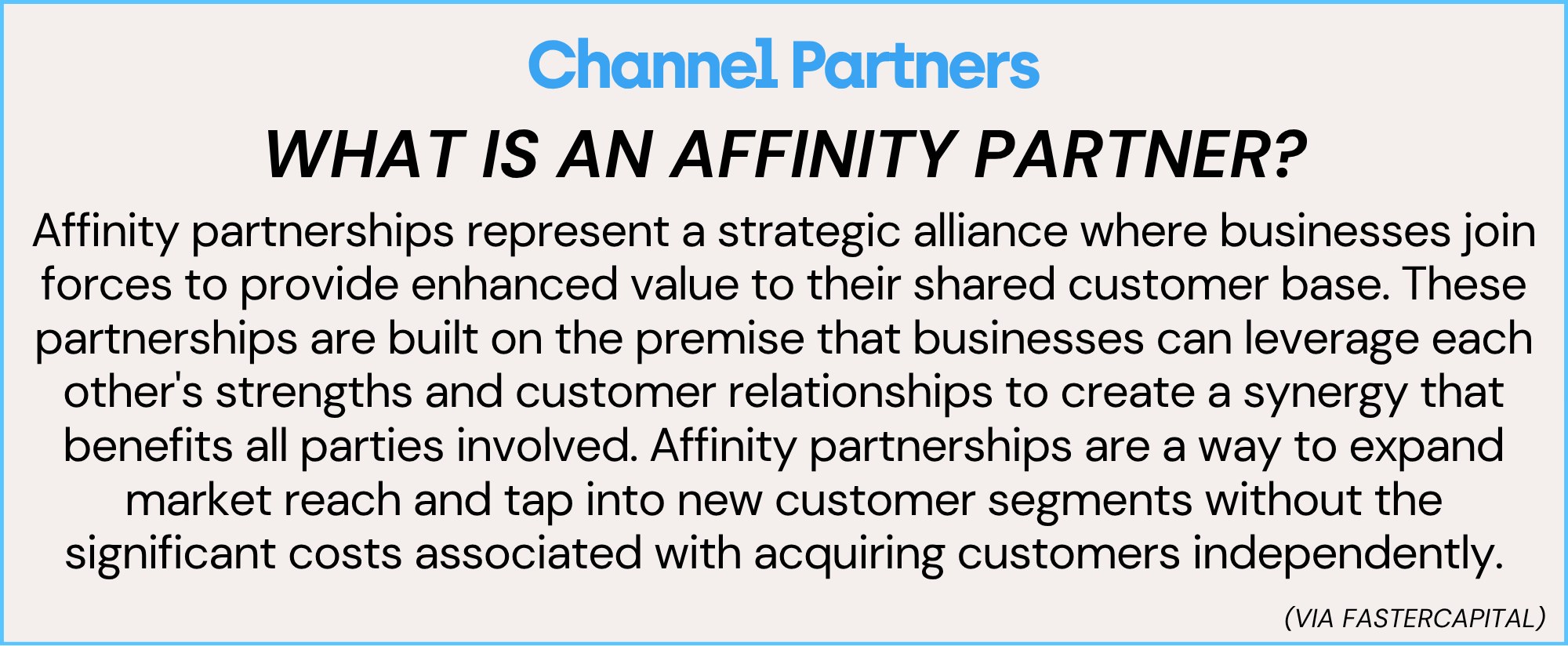
For the rePurpose Global team, successful partnerships begin with creating mutual value. Aditya frequently works with industry associations, what he calls ‘affinity partners,’ that already have trusted relationships with his target customers. Instead of approaching companies one by one, the team equips these associations with webinars, educational resources, and regulatory guidance that they can easily share with members, creating a scalable channel for customer acquisition.
While Aditya focuses on mutual benefit, Pablo emphasized another form of alignment: shared values. He believes BATx and Socya worked so well together because both organizations were committed to advancing sustainability and innovation. That shared purpose created a foundation of trust that allowed the relationship to evolve beyond its initial support and into increasingly ambitious collaborations.
This created a foundation of trust that allowed the relationship to develop beyond its initial support and into increasingly ambitious collaborations.
One of the most significant was a project with the United Nations Development Programme (UNDP). What began as an online grant opportunity that Pablo discovered later evolved into a much larger initiative focused on bringing electricity access to rural Indigenous schools.
After securing UNDP funding, BATx turned to Socya for its expertise in these communities, and the two organizations co-designed the project. And when Socya’s corporate backers learned about the undertaking, it grew even larger.
This multi-stakeholder collaboration ultimately brought electricity to an Indigenous community’s school, health, food, and communal centers, benefiting hundreds of residents while supporting long-term sustainable development and resilience.
Thanks to the project’s efficient execution and community involvement, BATx became a flagship of the UNDP’s initiative. Pablo has since been invited back to mentor other participants, and his work was later featured in a UNDP documentary, further amplifying BATx’s impact.
Education as a Go-to-Market Strategy
As their ventures evolved, both ReBokeh and rePurpose Global found that market education became central to their growth strategies.
For Rebecca, a consistent challenge has been helping prospective partners understand the problem her venture solves: accessibility gaps faced by people with low vision, and why traditional solutions often fall short.
To address this, ReBokeh has invested heavily in its storytelling and media coverage, including spotlighting the experiences of existing partners.
“Once an organization can see the impact that ReBokeh has had for other partners of ours, the value becomes clear,” Rebecca said.
rePurpose Global’s go-to-market strategy evolved significantly as new global packaging regulations emerged. Recognizing that many companies lacked awareness of evolving compliance requirements and their potential consequences, the team began leading with education, helping prospective customers understand both the challenge and how rePurpose Global could help address it.
Building Credibility Through Visibility
All three founders also pointed to the importance of visibility and relationship-building in creating partnership opportunities. For BATx, conferences, sustainability events, and ecosystem participation became critical spaces to foster trust and credibility.
BATx also approached the Medellín Chamber of Commerce early in its journey, sharing its experience as a local climate technology company advancing the city’s renewable energy ambitions.
As a result, the Chamber of Commerce nominated BATx for a spot on the Board of Directors of its Sustainable Energy Hub, where it became the first startup and youth-led company to join—an appointment that expanded BATx’s prestige and network.
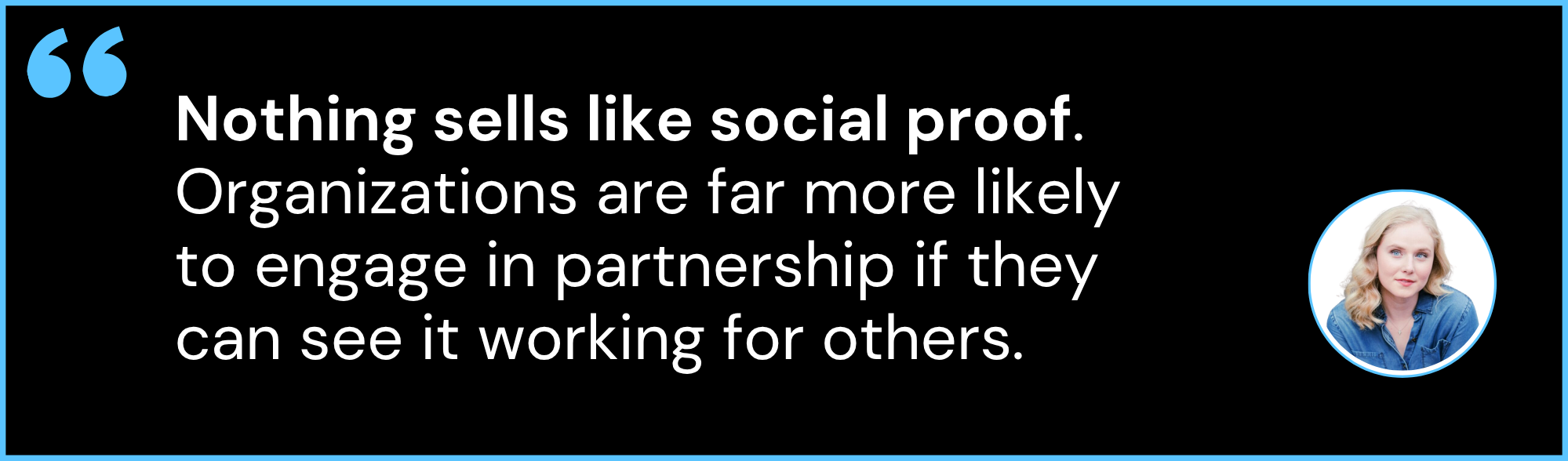
At rePurpose Global, customer advocacy became a key growth driver. The company frequently invites existing customers to participate in webinars, share testimonials, and speak publicly about their partnership experience.
“The insight for us was, how do we make our customers our advocates?” Aditya said. “That’s one thing that I’m really glad we leaned on, was in arming the customer with a lot of material to talk about our work together, because they were getting value from our work together anyway, [and] they wanted to talk about it.”
On its own platforms, the rePurpose Global team shares case studies that highlight successful partnership stories, including a multi-part activation with beauty brand Saie and packaging integration with food brand MadeGood.
Today, rePurpose Global is trusted by more than 500 major consumer brands including Tom’s of Maine, Curology, and True Botanicals—a level of credibility built through consistent customer education, strong service, and long-term development.
Navigating Rejection
Throughout the process, each founder acknowledged that rejection is an inevitable part of building partnerships.
For Pablo, persistence comes from belief in BATx’s mission.
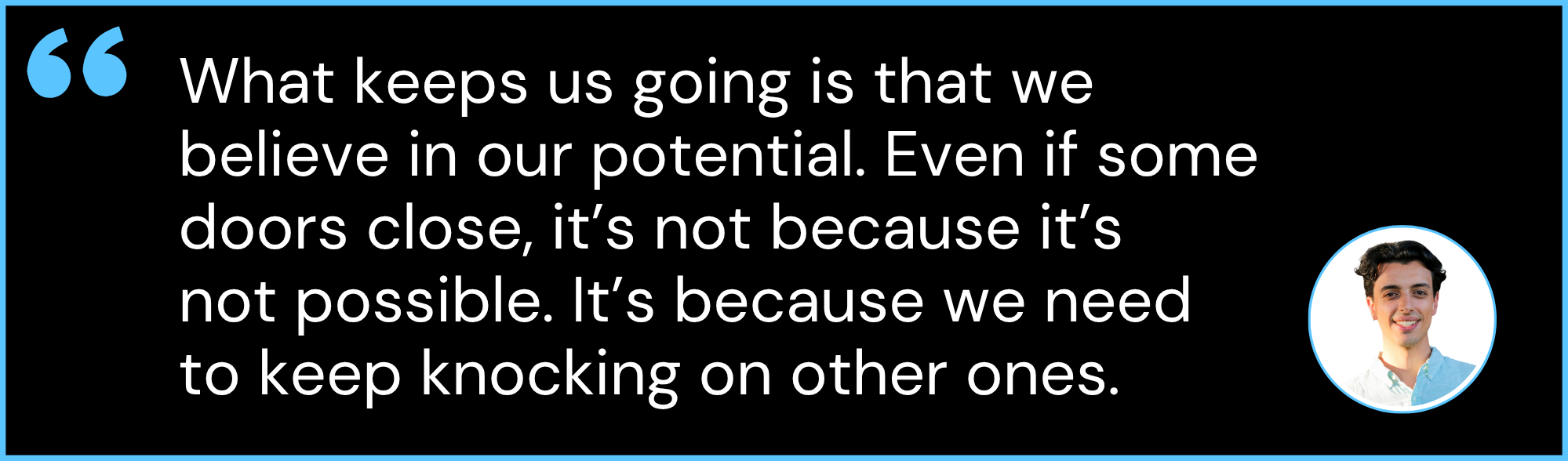
“We do face a lot of rejections,” he said. “But what keeps us going is that we believe in our potential. Even if some doors close, it’s not because it’s not possible. It’s because we need to keep knocking on other ones.”
Rebecca shared a similar perspective: “Rejection is part of any business’s path to success. You just have to understand that [it’s] not personal.”
Aditya recalled that in rePurpose Global’s early days, many companies ignored their outreach or even disengaged mid-conversation. Instead of feeling discouraged, he used those experiences to refine his team’s understanding of their ideal customer and sharpen their value proposition.
Here, Aditya also learned an important distinction when pursuing partnership leads.
“One piece of the puzzle that we were missing was, frankly, we were looking at any conversation we were having as a lead, just because we had the contact information of the person,” Aditya said.
The team wasn’t yet distinguishing between brands they hoped to work with, or a marketing qualified lead, and brands that had demonstrated some genuine buying intent, known as a sales qualified lead. Creating a clearer filtering process helped Aditya focus his efforts more effectively.
Conclusion: Key Takeaways for Founders
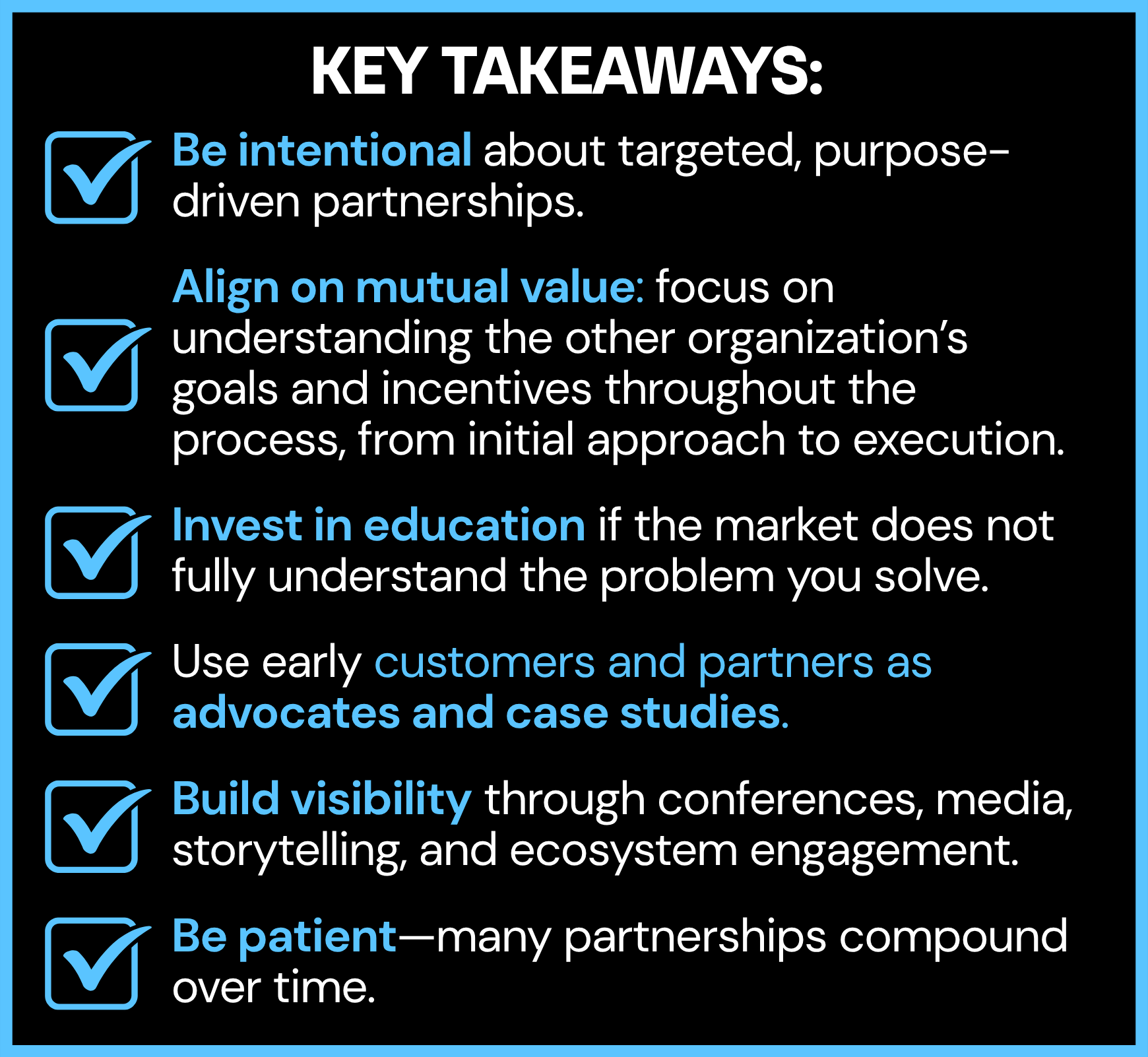
The experiences of BATx, rePurpose Global, and ReBokeh help explain why so many startups view strategic partnerships as a critical driver of growth.
Though their industries and business models differ, the same principles remain true. Meaningful partnerships rarely materialize overnight; they result from consistency, credibility, and a commitment to create value for others.
Whether through education, collaboration, or customer advocacy, each founder used partnerships not just as a growth tactic, but as a way to amplify impact.
‘From the Founders’ is an article series designed to take you behind-the-scenes with Halcyon alumni, delivering direct, actionable advice for impact-driven entrepreneurs worldwide. Read more here.