Food as Medicine: What Two Health Ventures Reveal About the Future of Care
June 3, 2026
By Gretchen Haga
—
Isis Ashford remembers the moment clearly. Her father, then 65 and managing Type 2 diabetes, sat in his nutritionist’s office looking for a way to lower his blood sugar. The nutritionist offered what she thought was a simple instruction: stop eating meat and start eating kale.
Ashford’s father turned to her and her husband and asked, “What the hell is kale?”
Ashford affectionately describes her father as a ‘proud country boy’ who grew up eating his own version of ‘greens,’ and kale simply wasn’t one of them.
The exchange revealed more than a dietary disconnect. The nutritionist’s recommendation may have been clinically sound, but it overlooked culture, access, and trust—factors that often determine whether health advice is truly sustainable.
That gap sits at the center of a growing movement known as food as medicine: the idea that nutrition can help prevent, manage, and even reverse chronic disease. Amid rising rates of diet-related illnesses, a new generation of founders is integrating food directly into care delivery, often for communities historically underserved by healthcare systems.

Several factors have contributed to the rise of food as medicine. As ImpactAlpha recently noted, diet is now the leading cause of illness and death in the US, and about 60% of adults have at least one diet-related chronic disease. Treating these conditions costs more than $1 trillion a year, roughly equal to the American population’s total annual food bill.
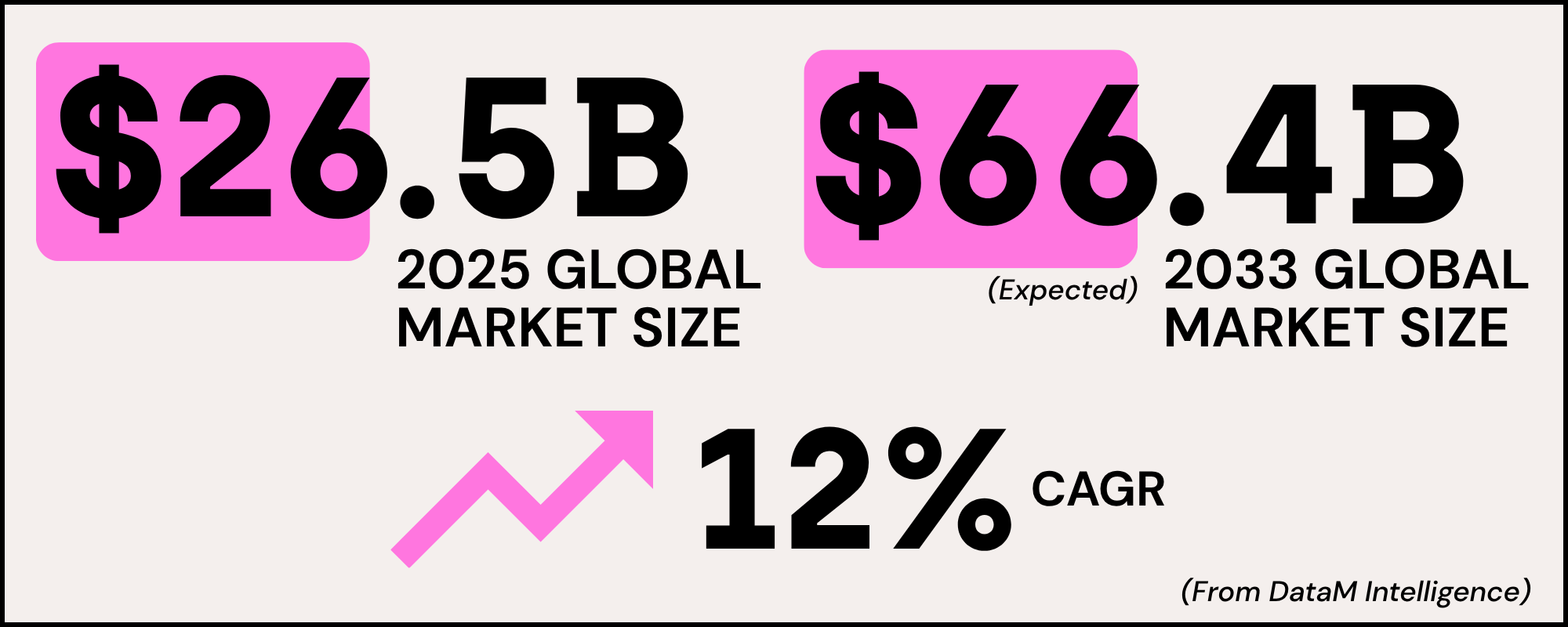
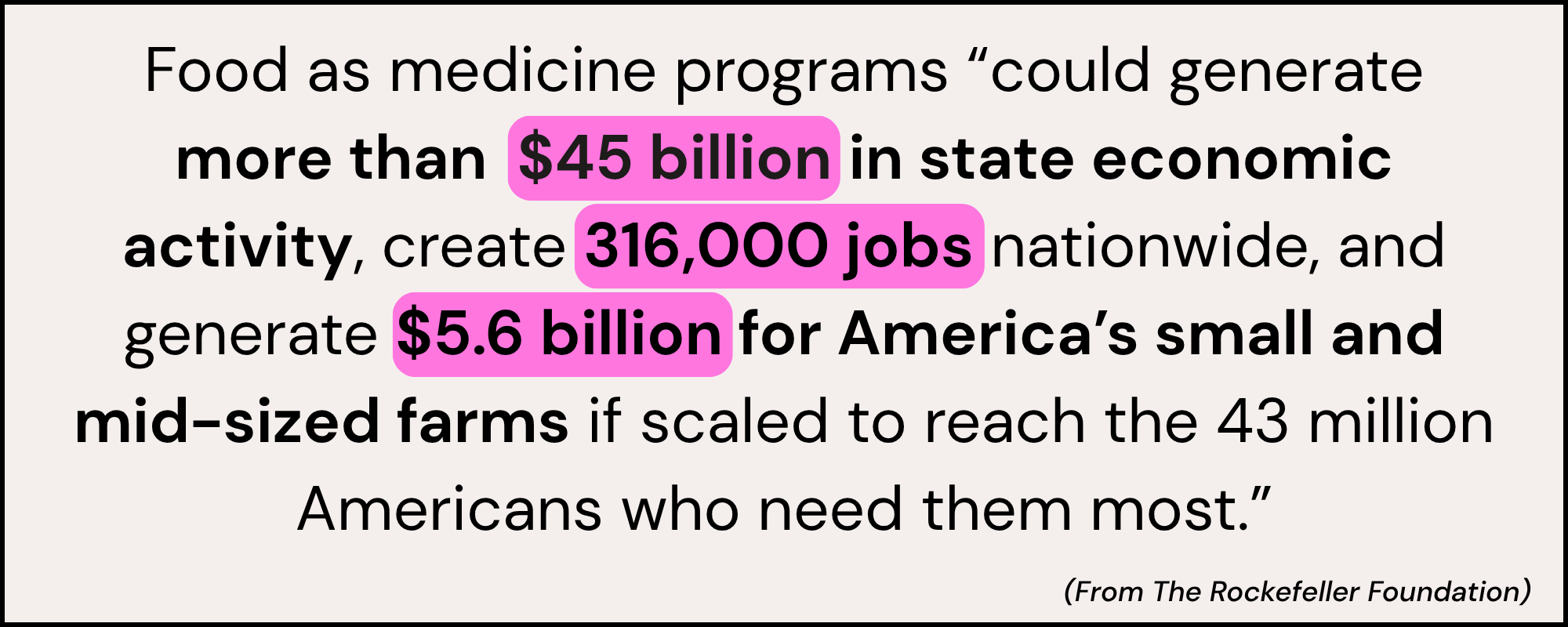
Early food as medicine programs have shown positive results. Studies and reviews led by UT Southwestern Medical Center and the American Heart Association point to their potential to improve outcomes in Type 2 diabetes, heart disease, chronic kidney disease, and other cardiometabolic conditions. The Rockefeller Foundation estimates these interventions could avert 6 million hospitalizations and save billions in healthcare costs each year.
At a smaller scale, participants in one DC nonprofit’s program saved an average of $9,020 in hospital costs over six months. For those with the highest hospital bills, average savings reached $52,000.
Food as medicine also reflects a broader turn toward personalized care. Advances in AI, mobile health tools, and data-driven care are accelerating that shift, moving the field away from generic advice and toward more tailored interventions.
“As we look at the health industry, it’s really going to be a lot of personalization,” said Kenneth Watson, Founder and CEO of HealthLink360. “And personalization that looks at culture, that looks at environment, that looks at zip codes, [and] all of these different nuances.”

Watson was building a career as a medical malpractice attorney, but found himself neglecting his own health along the way.
Then came the wakeup call: “I was diagnosed with hypertension and diabetes—two diseases that can [often] be prevented if I was doing what I needed to do, when I needed to do it,” he said.
That experience inspired HealthLink360, a personal wellness assistant designed to interpret users’ health signals and provide tailored resources and support.
The platform utilizes AI algorithms and smartphone-based imaging, including photoplethysmography, a method that detects key physiological signals from the light reflected off a user’s face.
“Measuring the difference in the red, blue, and green light allows our system to understand your heart rate, blood pressure, and over 15 health-critical biomarkers taken just with your cellphone,” Watson said.
Combined with a user’s social determinants of health and daily behaviors, these insights help HealthLink360 recommend habits that build a healthier lifestyle over time.
It also offers digital twin modeling to show potential outcomes if users follow its guidance.
Watson always knew that food as medicine would be central to his venture, drawing on his earlier experience founding the meal-prep concept, Esquire Meals.
“One of the first resources [HealthLink360’s] AI was able to identify with our users is that they dealt with food insecurities,” Watson said. “And not just having access to healthy ingredients, but they didn’t want to cook it, either.”
Using data from its face-scanning technology, HealthLink360 can identify users’ health conditions and create personalized meal plans.
Watson says long-term adherence to this depends on consistency, customization, and community—all core parts of HealthLink360’s model.
“Prevention only works when it is culturally familiar and people trust the process,” he said.
Following early pilots, HealthLink360 plans a public launch soon; as of May 2026, its waitlist is open.

Ashford and her Co-Founder, Kehlin Swain, were inspired by her father’s experience. Like Watson, they saw an opportunity to rebuild trust in medicine—especially for overlooked communities—by bringing cultural norms into care.
Their venture, Greens Health, combines AI, remote monitoring, and culturally tailored education to provide personalized dietary guidance, real-time glucose predictions, and coordinated care for chronic conditions including diabetes.
Greens Health received its first funding from the National Science Foundation to personalize nutrition tools for underserved markets. In this early model, users could photograph their daily meals in an app and receive macronutrient information.
From there, the venture expanded into precision nutrition, organizing its work around three core areas. First is food prescription, a core part of most food as medicine programs.
“To us, it means being able to prescribe people things that they’re going to actually eat,” Swain said.
For Ashford’s father, a Greens Health coach would consider his background and preferences when giving a recommendation.
“The nutritionist could have said, ‘eat greens,’ which has similar macronutrients [to kale], … and can really help slow the blood sugar after eating,” Swain said.
Greens Health’s second pillar is meal preparation. This often incorporates culturally tailored delivery services that send food to people’s homes, while helping them learn cooking skills and correct portion sizes.
Their third component is shopping—what Swain calls the ‘spectrum of food acquisition.’
“I think if you can win at the grocery store, [and] you can control your bill, food can be your medicine that can really help curb a lot of blood sugar,” Swain said.
Going forward, Swain sees strong opportunities for healthcare providers to use AI and emerging technologies to close equity gaps in food as medicine programs.
For example, Greens Health uses natural language processing to gather personal context, from where a user is from to the humor they respond to. They then tailor their messaging and employ relevant metaphors to make complex medical topics accessible, especially for people with low literacy.
Swain believes this system can help nutritionists communicate across cultural barriers to better reach their patients.
For Ashford’s father, the Greens Health model has delivered measurable results. He has lost more than 20 pounds, lowered his A1C from an eight to a six, and now takes his medication at full adherence.
“Those things keep [him] out of the hospital,” Swain said.
“And keep his family happy!” Ashford added.
What founders like Ashford, Swain, and Watson are building reflects a broader shift in healthcare—one that recognizes that lasting health outcomes are shaped not just in clinics.
Food as medicine is becoming part of a broader push to make healthcare more preventative, personalized, and responsive to the full context of people’s lives. Ventures that reflect this are redefining healthcare delivery, particularly for communities underserved by traditional systems.
This year, Halcyon is launching the third iteration of our US Health program, accelerating ventures using technology to improve health outcomes, reduce barriers to care, and make healthcare more accessible and affordable.
We also continue to support 110+ health-sector alumni ventures through events and programming, curated benefits, and connections and resources tailored to their next stages of growth.
Sign up for our newsletter and follow us on social media to keep up with our 2026 US Health program and learn more about our founders innovating in healthcare and beyond.